Why More Families Are Replacing Subscription Gift Services With Curated Secondhand Traditions That Mean More
Chris Martinez
09/14/2026
5 min read
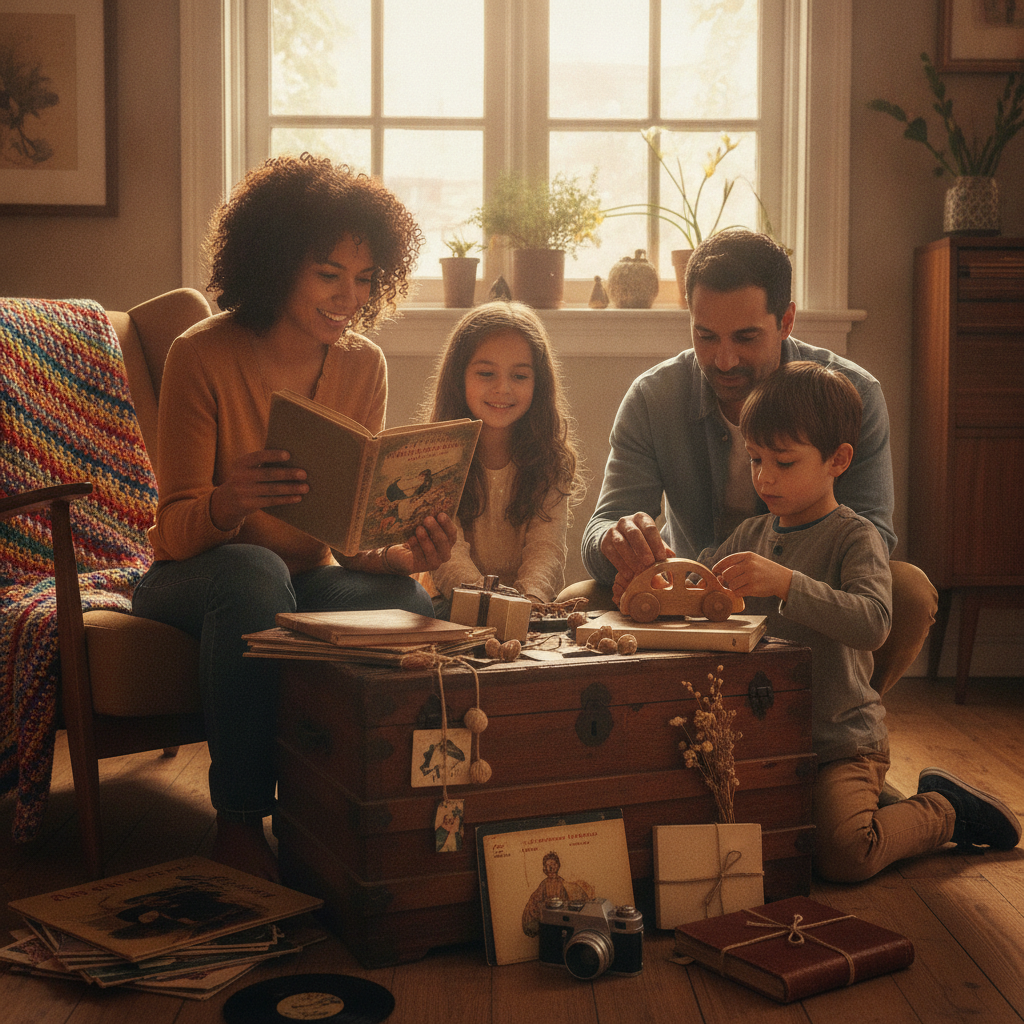
Gift-giving has always been a language, and like any language, it shifts with the times — sometimes toward efficiency, sometimes toward meaning, and occasionally toward something that manages to hold both at once. For the better part of a decade, subscription boxes promised to solve the problem of thoughtful gifting by automating it: a curated package arriving at regular intervals, wrapped in tissue paper and goodwill. Yet something quietly changed. Families began stepping back from these services — not out of dissatisfaction exactly, but out of a growing hunger for something that couldn't be fulfilled by algorithm. What emerged in their place is a practice rooted in intention, history, and the slow pleasure of the hunt.
The Limits of the Curated Subscription Model
Subscription gift services like Cratejoy and FabFitFun built their appeal on convenience and the thrill of surprise, and for a period, they delivered on that promise convincingly. A birthday box would arrive, and the recipient would feel considered — even if the items inside were chosen by a team of buyers working from broad demographic profiles rather than genuine knowledge of the person. Over time, though, the seams began to show. Families noticed that the boxes, for all their charm, felt interchangeable. The items rarely told a story. They didn't carry the weight of someone thinking about who you actually are. Convenience, it turned out, had a ceiling when it came to emotional resonance, and families started reaching past that ceiling.
The Rise of Secondhand as an Intentional Practice
Where subscription services offered novelty, secondhand gifting offers something older and stranger: the sense that an object already has a life, and that passing it on is an act of continuation rather than transaction. This shift isn't driven purely by budget consciousness, though value certainly plays a role. It's driven by a philosophy — sometimes called slow gifting, a term borrowed loosely from the slow food movement — that treats the process of finding a gift as part of the gift itself. Platforms like ThredUp and local estate sales have become hunting grounds for families who want to arrive at a birthday or holiday with something that carries genuine specificity. A first-edition paperback, a vintage Le Creuset casserole dish, a hand-stitched quilt found at a Sunday market in a town no one had visited before: these items don't just fill a box, they open a conversation.
The emotional architecture of secondhand gifting is fundamentally different from its subscription counterpart. When someone spends three Saturdays looking for the right object — something that speaks to a sister's love of mid-century ceramics or a father's quiet obsession with old maps — the recipient feels that effort before they even unwrap it. There's a Scandinavian concept, omtanke, which translates roughly as thoughtfulness or consideration given in advance, and it captures something essential about why this practice resonates so deeply. The gift becomes evidence of attention paid over time, not just money spent in a moment.
How Families Are Building New Rituals Around Old Objects
What's particularly striking is how these individual acts of secondhand gifting have evolved into family rituals with their own textures and traditions. Some families have instituted an annual treasure hunt dynamic, where each member is assigned another person to shop for over the course of a full season, visiting thrift stores, estate sales, and antique markets with that person quietly in mind throughout. Others have developed what might be called a provenance practice — the tradition of attaching a handwritten note to any secondhand gift explaining where it was found, what drew the giver to it, and why it seemed right. This small addition transforms an object into a story, and stories are what families actually keep.
Market Roots, a collective of vintage dealers operating across several mid-size American cities, has reported a noticeable uptick in younger shoppers arriving specifically with gift-giving in mind rather than personal acquisition. The shift is visible not just in sales patterns but in the nature of the questions buyers ask — less focused on condition or resale value, more focused on character and origin. That quality of curiosity is, in itself, a form of care.
What Children Learn From Secondhand Traditions
There is a pedagogical dimension to this movement that families often discover by accident. When children are brought into the process of secondhand gift-finding — taken to a flea market and asked to think carefully about what a grandparent might love — something quietly educational happens. They begin to understand that attention is a resource, and that spending it on someone else is a kind of generosity that runs deeper than purchasing power. They also encounter the concept of circular economy in its most human form: the idea that objects have journeys, that ownership is temporary, and that choosing to continue something's life is a meaningful act. These aren't lessons that arrive with a subscription box.
The Quiet Financial Logic Behind the Shift
The practical dimension of this movement deserves acknowledgment without being overstated. Subscription services carry recurring costs that accumulate significantly across a year, particularly for families managing multiple memberships across different recipients. Secondhand gifting doesn't eliminate spending, but it tends to redirect it — toward fewer, more deliberate purchases that often cost less individually while feeling considerably more valuable to the person receiving them. The cost-per-meaning ratio, if such a thing could be measured, tilts decisively toward the secondhand approach. Families who have made the switch frequently describe a sense of relief at stepping off the automated renewal cycle and returning to something that requires their presence rather than their payment details.
If the rise of subscription gift culture reflected an era that valued frictionlessness above almost everything else, the quiet migration back toward curated secondhand traditions reflects something more grounded — a realization that friction, applied with care, is often exactly what makes something feel real. The best gifts have always been the ones that required someone to stop, think, and look. The families who are rediscovering this aren't rejecting generosity; they're practicing a richer version of it, one object and one Saturday at a time.
More Trending Articles
How Offline Password Managers Are Becoming the Practical Middle Ground Between Security and Convenience for Everyday Users
Chris Martinez
09/15/2026