How to Build a Capsule Wardrobe on a Budget Without Sacrificing Style
Robert Kim
06/28/2026
4 min read
There is a particular kind of exhaustion that comes from standing in front of a full closet and feeling like there is nothing to wear. It is a familiar paradox — too many clothes, too little coherence — and it speaks to something deeper than mere disorganization. The capsule wardrobe, a concept that has quietly influenced fashion-minded minimalists for decades, offers a remedy that is both practical and, when done thoughtfully, genuinely elegant. The premise is simple: fewer pieces, more intention, and a wardrobe that works harder for the people who wear it.
The Philosophy Behind Fewer Pieces
The capsule wardrobe concept traces its origins to the 1970s, when London boutique owner Susie Faux coined the term to describe a compact collection of timeless essentials that could be worn interchangeably across seasons. The idea was never really about deprivation — it was about curation. A well-built capsule removes the noise of impulse purchases and trend-chasing, replacing them with a considered collection where each piece earns its place. For those watching their spending, this philosophy aligns naturally with frugal living principles: buy less, choose better, and get far more mileage out of what you own.
Identifying Your True Style Foundation
Before spending a single dollar, the work begins with self-assessment. Most people, when pressed, can identify the handful of outfits they actually reach for — the dark jeans that fit well, the neutral blazer that transitions from office to dinner, the clean white shirt that never quite goes out of style. These instincts are the foundation of a personal capsule. Spending time auditing an existing wardrobe — pulling out what gets worn, donating what doesn't — costs nothing and often reveals that the core pieces are already there. Style clarity, it turns out, is one of the most undervalued tools in budget dressing.
Building Around a Neutral Color Palette
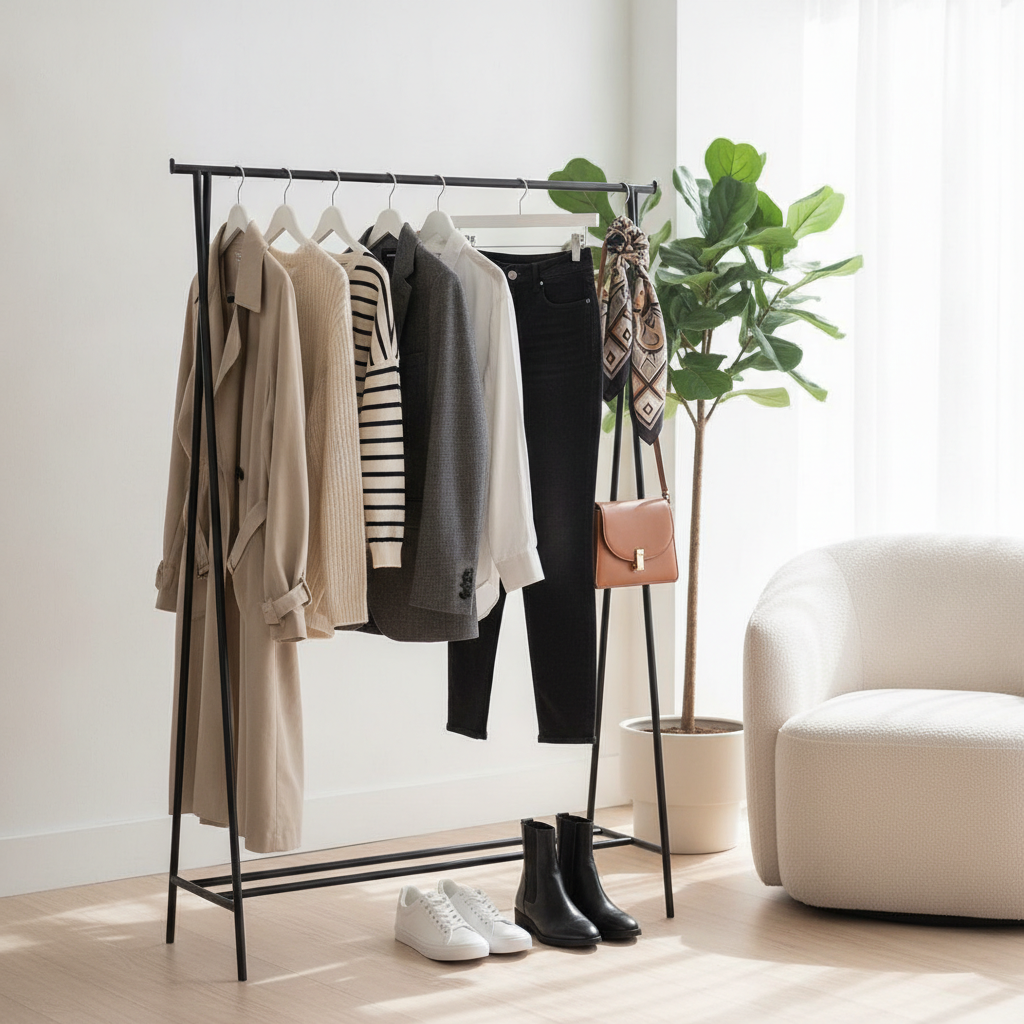
Color coordination is where many budget wardrobes quietly succeed or fail. A collection built around a cohesive neutral palette — navy, grey, camel, white, black — creates what stylists call interoperability, meaning virtually every piece can work with every other. Adding one or two accent colors, perhaps through scarves or a single statement piece, brings personality without chaos. Brands like Everlane and Uniqlo have built entire business models around affordable, palette-friendly basics, and their core collections remain reliable entry points for anyone building from scratch or filling gaps without overspending.
Smart Shopping Strategies That Actually Work
Building a capsule on a budget requires a shift in shopping behavior — away from volume and toward value. Thrift stores in neighborhoods like Brooklyn's Park Slope or Chicago's Wicker Park often carry gently used, high-quality staples at a fraction of retail price, particularly for blazers, trousers, and outerwear. Apps like Poshmark and ThredUp have made secondhand shopping accessible beyond geography. When buying new, waiting for end-of-season sales on investment pieces — a wool coat, leather boots, quality denim — means paying significantly less for items that last considerably longer than their fast-fashion alternatives.
The Cost-Per-Wear Principle in Practice
One of the most useful mental frameworks in budget dressing is cost-per-wear — the idea that the true cost of a garment is its price divided by the number of times it gets worn. A well-made linen shirt purchased for forty dollars and worn eighty times costs less per use than a ten-dollar trend piece worn twice before fading or falling apart. This reframing helps justify modest investment in key pieces while reinforcing restraint around low-quality impulse buys. It is the quiet arithmetic behind why a capsule wardrobe, built slowly and deliberately, tends to be more economical over time than a constantly refreshed, trend-driven closet.
Seasonal Refreshing Without Starting Over
One of the capsule wardrobe's most practical advantages is its adaptability. Rather than rebuilding each season, the approach calls for rotating a small number of seasonal additions into an established core. A linen blazer comes in for spring; heavier knitwear takes its place in autumn. This seasonal layering — adding and storing rather than replacing — keeps costs low while keeping the wardrobe feeling current. Dedicated storage like vacuum-seal bags or simple cedar-lined boxes protects off-season pieces, extending their life and preserving the investment made in each one.
Your Capsule, Your Choices
If you take one idea forward from this, let it be this: a capsule wardrobe is not a rigid formula but a personal practice. Start with what you already own and love. Fill the gaps with patience — one quality piece at a time, sourced secondhand when possible, bought on sale when new. Trust your own instincts over trend cycles. The goal isn't a Pinterest-perfect closet; it's a wardrobe that makes getting dressed feel easy, confident, and genuinely yours, regardless of what it cost to build.
The paradox that opens so many mornings — too much clothing, too little to wear — dissolves not by buying more but by choosing better. A capsule wardrobe returns the closet to what it was always meant to be: a curated set of tools for living, not a repository of unfinished style experiments. Built with intention and maintained with discipline, it is one of the quieter, more satisfying forms of financial and personal clarity available to anyone willing to start.