Why More People Are Replacing Impulse Online Orders With a Printed Weekly Wants List — and What It Does to the Way They Feel About Buying
Sarah Mitchell
11/05/2026
6 min read
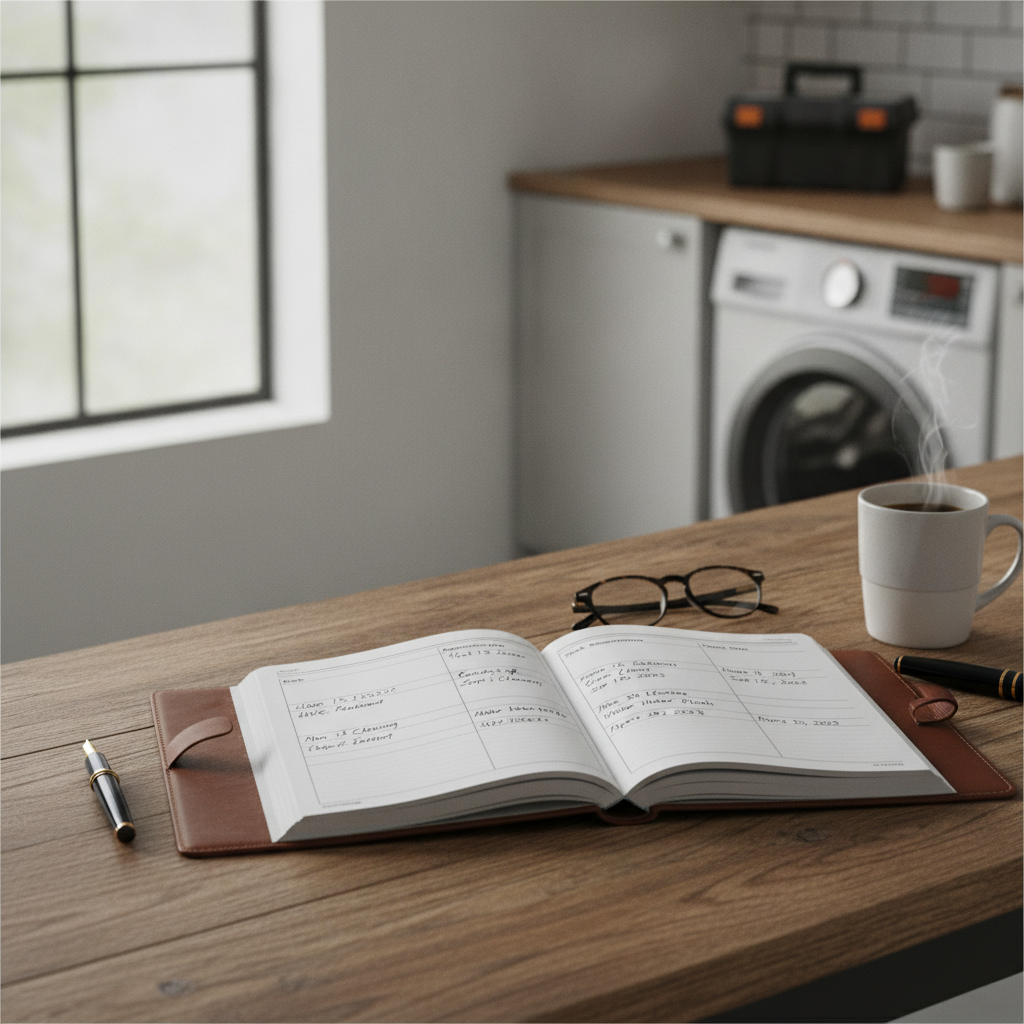
Something has shifted in the way a growing number of people relate to the act of buying things. After years of frictionless one-click ordering, same-day delivery, and algorithmically curated product feeds designed to shorten the distance between desire and purchase, a quieter counter-movement has taken hold — one that involves a piece of paper, a pen, and a deliberate pause before anything enters a cart.
The printed weekly wants list is exactly what it sounds like: a handwritten or simply printed sheet where a person records the things they feel drawn to buying over the course of a week, then revisits the list before acting on any of them. The practice is unglamorous by design. It has no app, no gamified streak, no social sharing feature. And that, for the people who swear by it, is precisely the point.
The Friction That Changes Everything
Digital retail has spent two decades engineering the removal of friction from the buying experience. Amazon's one-click purchasing, Shopify's accelerated checkout, Apple Pay's biometric confirmation — each innovation was built to collapse the moment between wanting something and owning it. What behavioral economists call the "pain of paying" was systematically softened, then nearly eliminated. The result was a generation of consumers who, by their own admission, often couldn't remember ordering things until they arrived at the door.
The printed wants list reintroduces friction deliberately. Writing something down by hand requires a small but meaningful cognitive commitment. It externalizes the desire without immediately acting on it. Psychologists who study consumer behavior have long noted that the anticipation of a purchase often produces more emotional activation than the purchase itself — a phenomenon sometimes called the "anticipation effect." The wants list exploits this in reverse, using the week-long gap to let that activation cool before money changes hands. What emerges from that cooling period is frequently surprise: the item that felt urgent on Tuesday feels optional, even puzzling, by Sunday.
A Practice With Older Roots
There's a long cultural lineage behind the idea of the written wish or wants list that predates digital retail by centuries. In Japanese domestic tradition, the concept of mono no aware — roughly translated as "the pathos of things" or a bittersweet awareness of impermanence — has historically informed a more contemplative relationship with material objects. Things are considered with care, chosen slowly, and kept with intention. The disposable velocity of fast consumer culture sits in direct tension with this sensibility, and many people drawn to the wants list practice describe something similar: a desire to restore a sense of meaning to the objects they bring into their lives.
In Scandinavian household culture, the concept of lagom — meaning "just the right amount" — has long governed attitudes toward consumption. Neither excess nor deprivation, but a considered sufficiency. The wants list functions as a practical expression of this philosophy, translating an abstract cultural value into a weekly domestic ritual that anyone, regardless of background, can adopt without explanation or ceremony.
What the List Reveals About Desire
One of the most consistent observations people report after keeping a weekly wants list for a month or more is that the list becomes a kind of emotional diary. Patterns emerge. Certain categories — home objects, clothing, kitchen tools, gadgets — spike during particular emotional states or life phases. Someone who notices that most of their impulse desires cluster around home décor during stressful work periods is learning something specific about how they use shopping as a coping mechanism. That knowledge is difficult to access when purchases happen instantly and invisibly.
Retailers like Anthropologie and brands that occupy the aspirational home goods space have built entire marketing architectures around the emotional vulnerability that stress-shopping creates. The curated lifestyle imagery, the warm editorial copy, the sense that one more object will complete a room or a feeling — these are carefully constructed invitations. The wants list doesn't eliminate desire so much as it creates enough distance to distinguish between what is genuinely wanted and what has been expertly triggered. For many people, that distinction turns out to be significant.
The Emotional Aftermath of Slower Buying
What people describe feeling after several weeks of the practice is harder to quantify but consistently reported: a reduction in what might loosely be called "purchase regret fatigue" — the low-grade dissatisfaction that accumulates when a home fills with things that never quite delivered what they promised. Each impulse purchase carries an implicit emotional contract: this will make something better, easier, more beautiful, more complete. When the object arrives and that contract goes unfulfilled, there's a small but real emotional cost. Multiply that across dozens of purchases a year and the cumulative effect is a kind of ambient disappointment with buying itself.
The wants list, by filtering out the purchases that wouldn't have survived a week's reflection, appears to raise the hit rate on the ones that remain. The things that are still on the list after seven days tend to be bought with more conviction and received with more satisfaction. The act of waiting has, in effect, pre-approved the purchase emotionally in a way that one-click ordering never allows.
Paper in a Digital World
The choice to print or handwrite the list rather than keep it in a notes app or a wishlist feature like those offered by Target or Etsy is not incidental. Screen-based lists exist within the same ecosystem that generates the desire in the first place. A digital wishlist on a retailer's platform is still a retailer's platform, still showing related products, still sending reminder emails. Paper exists outside that ecosystem entirely. It doesn't push notifications. It doesn't update with price drops. It simply holds what was written on it and waits.
There's also something in the physicality of paper that changes the quality of attention brought to the review. Reading a handwritten list at the end of the week is a different cognitive experience than scrolling through a saved items folder. The handwriting itself carries information — how hurriedly or carefully something was written, whether it was starred or second-guessed — that a typed entry cannot.
The people most committed to the practice describe it not as a budgeting tool but as a clarity tool. The goal isn't primarily to spend less, though that tends to follow. The goal is to feel more like the author of their own choices rather than the audience for someone else's marketing. In a retail environment built to blur that line as completely as possible, a piece of paper turns out to be a surprisingly effective counterweight — quiet, unhurried, and entirely on the buyer's terms.