Why More People Are Embracing Slow Mornings as a Form of Daily Luxury That Costs Nothing
Emily Rodriguez
07/09/2026
6 min read
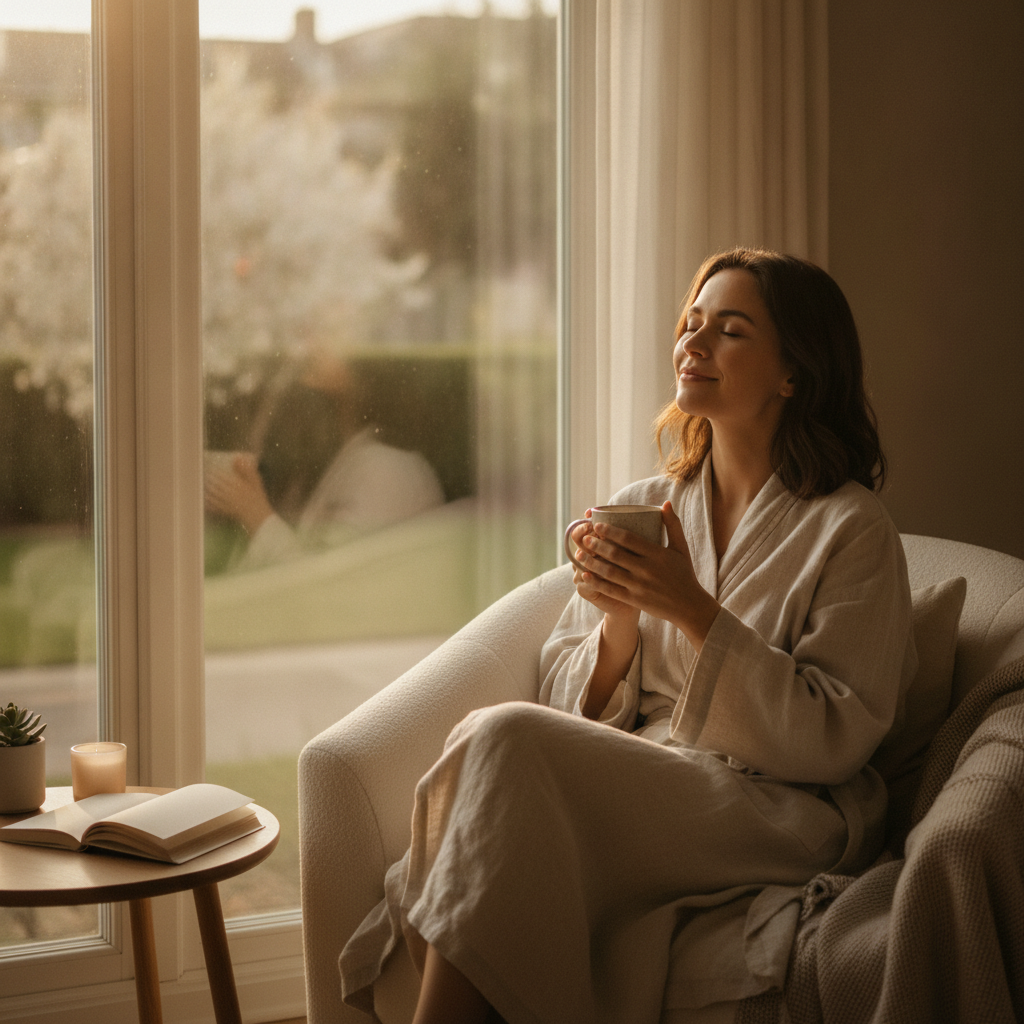
There is a particular quality to the early hour before obligation arrives — a stillness that most people rush past without noticing. The alarm sounds, and the reflex is to reach for the phone, to scroll, to begin cataloguing the demands of the coming day before the mind has fully surfaced from sleep. Yet a growing number of people are choosing differently, deliberately reclaiming that threshold between rest and waking as something worth savoring rather than spending. The slow morning, once associated with laziness or indulgence, is being reframed as one of the most meaningful forms of luxury available — and one that requires no subscription, no special equipment, and no disposable income.
The Cultural Roots of Slowing Down
The impulse to resist urgency in the morning hours has deep roots across many traditions. In Japan, the concept of ma — loosely translated as negative space, or the pause between actions — has long been understood as essential rather than empty. Scandinavian cultures practice hygge (pronounced hoo-ga), a Danish and Norwegian philosophy of coziness and present-moment contentment that often centers on unhurried mornings with warm drinks and natural light. These aren't just aesthetic preferences; they reflect a belief that the quality of a morning shapes the quality of everything that follows. What's changed is that these ideas are now resonating far beyond their cultural origins, finding purchase among people in Seoul, São Paulo, and Brooklyn who are quietly exhausted by the pressure to be productive from the moment they open their eyes.
The wellness industry has tried, with some success, to commodify this instinct — selling expensive pour-over coffee kits, weighted blankets, and morning ritual journals at premium prices. But the slow morning movement, at its most authentic, resists that framing. The point isn't to acquire the right props. It's to subtract: fewer alarms, fewer notifications, fewer commitments stacked against the first hour of the day. People who practice this consistently tend to describe the experience not as pampering but as orientation — a way of arriving in the day rather than being launched into it.
What the Body and Mind Are Actually Asking For
Sleep researchers have long understood that the transition from sleep to wakefulness is a gradual physiological process, not an instantaneous switch. The brain moves through a state called sleep inertia — a period of grogginess and reduced cognitive sharpness that can last anywhere from fifteen minutes to over an hour depending on sleep quality and individual biology. When people immediately expose themselves to bright screens, demanding emails, or high-stimulation news in this window, they're essentially interrupting a natural recovery arc. The slow morning works partly because it respects that arc, allowing cortisol levels to rise gradually and the nervous system to settle before being asked to perform.
This isn't about medical prescription — it's about listening to what the body already signals. Most people know the difference between the days they wake up and move slowly through coffee and quiet, and the days they sprint from bed to meeting to task. The contrast is felt, even if it's rarely named. Slow mornings create a buffer that keeps stress from compounding before noon. That buffer, it turns out, costs nothing to build.
Rituals That Ask Nothing of Your Wallet
The rituals people describe as part of their slow mornings are almost universally low-cost or free. Sitting near a window with natural light. Making coffee or tea without multitasking. Stretching without following a structured program. Reading a physical book or a single magazine article rather than scanning a feed. Stepping outside briefly — onto a balcony, a back step, a front porch — to register the temperature and the quality of the morning air. These are not elaborate routines. They are acts of presence, which is the one thing that cannot be purchased and the one thing that makes the morning feel genuinely different.
Some people incorporate journaling, writing freely for a few minutes without agenda or audience. Apps like Day One have made this more accessible for those who prefer digital formats, though many practitioners prefer a plain notebook specifically because it keeps technology at a distance. Others find that the Headspace or Waking Up apps offer a gentle, guided entry point for those new to quiet sitting — a five-minute session that bridges sleep and activity without demanding expertise. The common thread across all of these practices is intentionality: the choice to begin the day on one's own terms, however briefly.
Why This Feels Radical in Practice
For all its simplicity, the slow morning runs against some deeply embedded cultural assumptions about productivity and worth. In many professional environments, being early, busy, and responsive is coded as virtue. The person who answers emails at 6 a.m. is often quietly admired, or at least tolerated, in ways that someone who spends that same hour in silence is not. This means that choosing a slow morning is, for many people, a small act of resistance — not against anyone in particular, but against an internalized standard that equates constant readiness with competence.
Neighborhoods like Portland's Sellwood district or London's Stoke Newington have seen a quiet cultural shift around this, with independent coffee shops deliberately designed for lingering rather than throughput — no power outlets visible, soft lighting, seating arranged for conversation rather than laptop work. These spaces reflect a broader appetite for environments that permit unhurriedness. But the slow morning doesn't require leaving home. It only requires the decision, repeated across ordinary days, to protect that first hour from the immediate demands of productivity.
Making Space Without Making Excuses
If you've felt the pull of this idea but haven't found a way to act on it, the practical starting point is almost embarrassingly simple: set the alarm fifteen minutes earlier than necessary, and commit to not opening any screen during that time. That's the whole experiment. What fills the space — quiet, movement, a warm drink, a few pages of reading — matters less than the fact of the space itself. Most people who try this report that those fifteen minutes feel disproportionately restorative, which is partly why so many eventually stretch them to thirty, then to an hour, restructuring sleep schedules to protect the practice rather than sacrifice it.
The slow morning, at its core, is a reorientation of values: a decision that the first moments of consciousness each day belong to the person living them, not to an inbox or a feed or a deadline. That decision, once made consistently, tends to quietly reshape how the rest of the day unfolds — not because of anything mystical, but because beginning from a place of calm is simply a more stable foundation than beginning from one of urgency. There is a particular quality to that early hour before obligation arrives. It turns out, it was always available. Most people just hadn't stopped long enough to step into it.